

The niqab – the Islamic face veil – has become a high-profile garment during the pandemic, given its superficial similarity to a medical mask. It has recently taken center stage again due to masks becoming mandatory in public in the UK two years after Boris Johnson’s offensive remarks regarding niqab wearers. Political commentary dominates the public discussion, while little is being said about what makes a good, comfortable, and beautiful niqab. Do the fabric quality and weave matter? What about the fastening? And the layers? These questions may be particularly important to women who are considering wearing the niqab for the first time.
Writing my new book, Wearing the Niqab, I interviewed 40 women who wear the niqab in the UK and the US. While our conversations revolved around the religious aspect of the niqab, it became obvious that many of my respondents also cared about having an on-trend look. One mentioned that she paired her niqab with a leather bomber jacket; another was particular about accessorizing. This definitely goes against pre-conceived notions of what a niqabi (a woman who wears a niqab) is supposed to be.
Sometimes my respondents would hint at practical difficulties they faced due to the lack of experience when they first adopted the niqab. One of them, Faeeza (pseudonym) told me that initially, she wore a very concealing, black niqab paired with a heavy abaya, both of which turned to be made with low-quality polyester. She wore them with gloves and an eye veil in the summer. The overheating she experienced led to dizziness, shortness of breath, and migraines. Having consulted other niqabis online, she found a thinner garment in pastel colors that actually reflected the sunshine and didn’t cause her any problems.
A popular niqabi vlogger, The Scottish Revert Teacher, recounts that she abandoned the niqab after her first attempt to wear it, because it was cheap, low-quality, and very uncomfortable. It took her a whole extra year to gather the resolve to try the niqab again, and she wears it full-time now. “I don’t know if it comes in the video, but the material is very thin and breathable. It is very comfortable to wear,” she says in one of her videos.
In contrast to the medical mask, which is supposed to stop the droplets containing pathogens, the niqab is meant to enable breathing. Hence, high-end niqabs are advertised as breathable, and the fabric that’s used to make them is usually silk or silk-blend chiffon. Other, more affordable versions are made with rayon/viscose, silk-polyester and cotton blends. Umm Abdullah, a niqabi blogger, advises the first-time buyers to hold up the garment to the light, and examine whether light is coming through it. If so, it is porous, breathable, and most likely, comfortable to wear. Of course, the wearer’s location matters. Slightly thicker fabrics, possibly lined, may work in colder climates. In hot places, like Saudi Arabia or Malaysia, the niqab will be thinner (but not so thin as to be transparent).
Buying online from unknown retailers may be risky. As Umm Abdullah points out, most niqab manufacturers and retailers do not wear the niqab themselves, and some products may be mislabeled (polyester described as silk), made with inappropriate fabric such as microfiber, peachskin, or pure polyester, and simply be not up to standards, with the eye opening askew, careless stitching, or holes. It is a good idea to join an online niqab group and ask for recommendations, or look for reviews written by actual niqabis, such as Sajida, who writes about different niqab and burka styles. Many fans of the niqab follow niqabi influencers, such as Amy Roko, Mamoii Ali, or Aima Warriach, on YouTube and Instagram.
To find out more about niqab ins and outs, I talked via Facebook Messenger with Asiyah Umm Ammar, an importer and online vendor of Qibtiyyah Exclusive (a Malaysian clothing brand) apparel and a niqabi based in the UK. She has customers all over Europe and North America. Here are my notes from the crash niqab 101 course I took with her.
A single layer niqab (also known as “ninja style”) may have an additional band of fabric attached to the top of the main rectangular piece, leaving an opening for the eyes. A string dividing the eyehole (often seen in Egyptian niqabs) is not suitable for eyeglasses users, but otherwise is supposed to keep the headband in place. A half-niqab, which is also a single layer one, does not have the headband. (Umm Abdullah suggests on her blog that a half niqab is a good choice for outings, as it’s easier to pull down, or driving, as it doesn’t limit the peripheral vision).
A two- or three-layer niqab has additional pieces of same-length fabric sewn to the top edge of the main piece, allowing for experimenting with various looks: the second layer can be worn towards the back of the head, providing an additional head covering, or over the front of the face, obscuring eyes. Three of the four women I asked about their favorite niqabs for this article, adamantly said that they preferred multilayered niqabs; one of them commented: “I wear a two-layer niqab when I want to look really marvelous.”
The most common fastening styles are a tie (where the wearer ties a secure knot at the back of the head), elastic, Velcro, snaps, or buttons. I was told by many of my respondents in the United Kingdom and the United States that they avoided Velcro or snap fastenings, as those were too easy to unfasten by passersby who harassed them in the street and sometimes attempted to tear their niqabs down. The tie fastening is Asiyah’s favorite too; when her children were young, they often pulled on her niqab in public, and other fastening types did not withstand that. For that reason, she also preferred a single-layered niqab, as more fabric triggered more pulling by toddlers.
Another issue she addresses is the length; in our discussion, she identified a relatively short niqab it as “Saudi style.” Malaysian niqabs are longer, she says, and she prefers them that way, because they cover the chest area. Next, she showed me a single-layer niqab with a downward-pointing tip on the headband, which she called a “v-shape” or “widow’s peak.” Her understanding of Islam stipulates the coverage of all hair, including eyebrows. A v-shape niqab is better shaped to cover the eyebrows, especially when it rides up a little. “All these styles have practical functions. Someone who doesn’t wear the niqab, may read this variety entirely in terms of fashion choices or individual aesthetic style, but it’s always practical,” Asiyah says.

Niqab lends itself to innovation; we discussed novelty niqabs, such as the American ZipNiqab, the niqab with a zipper designed by niqabis (their slogan is “Why flip it, when you can zip it?”) It is meant to facilitate eating out and has a strong following online. Such solutions demonstrate that many Muslim women actively negotiate religious beliefs and social life in secular environments. Asiyah’s friend, Al’Amirah Alnabila, UK-based designer and tailor, developed a niqab with a Velcro opening for the mouth, but Asiyah isn’t a fan of Velcro – it snags other fabrics easily.
Out of professional interest, Asiyah Umm Ammar observes niqab trends in different parts of the world: “In the US, the niqab is more ‘liberated’ and women are more open to experimenting, combining niqab with different accessories; in the UK, the niqab is more classic. Since the religious police was disbanded in Saudi, you can see more interesting, colorful niqabs in Riyadh or Jeddah, but in the holy cities of Makkah and Medina colors aren’t popular”.
The niqab, despite its negative portrayals and legal bans, continues to grow in popularity globally. As the widespread adoption of masks makes the niqab more inconspicuous, more women who have been considering putting the niqab on, feel inspired to try it now, and some of them are bound to continue once the pandemic is over. Wearing the niqab involves making many choices and developing various preferences regarding fabrics, lengths, styles, and the degree of coverage. Contrary to many criticisms, wearing one can be a positive experience; as one woman put it, “It’s delightful. When I wear the niqab, I feel the wind on my face.”
Anna Piela is a religious studies visiting scholar at Northwestern University. To read more of her work and research relating to the niqab, visit her website and pre-order her book, Wearing the Niqab: Muslim Women in the UK and the US.
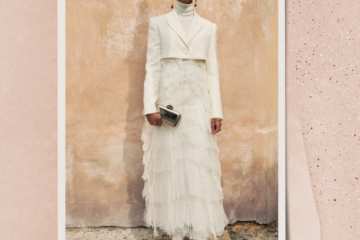
Images courtesy of Qibtiyyah Exclusive.

[…] “I wear a two-layer niqab when I want to look really marvelous”: how fashion influences … book bloggerbookstagrammerBTSmodest fashionniqabiPakistani blogger Share FacebookTwitterLinkedInPinterestStumbleuponEmail […]
[…] “I wear a two-layer niqab when I want to look really marvelous”: how fashion influences … […]